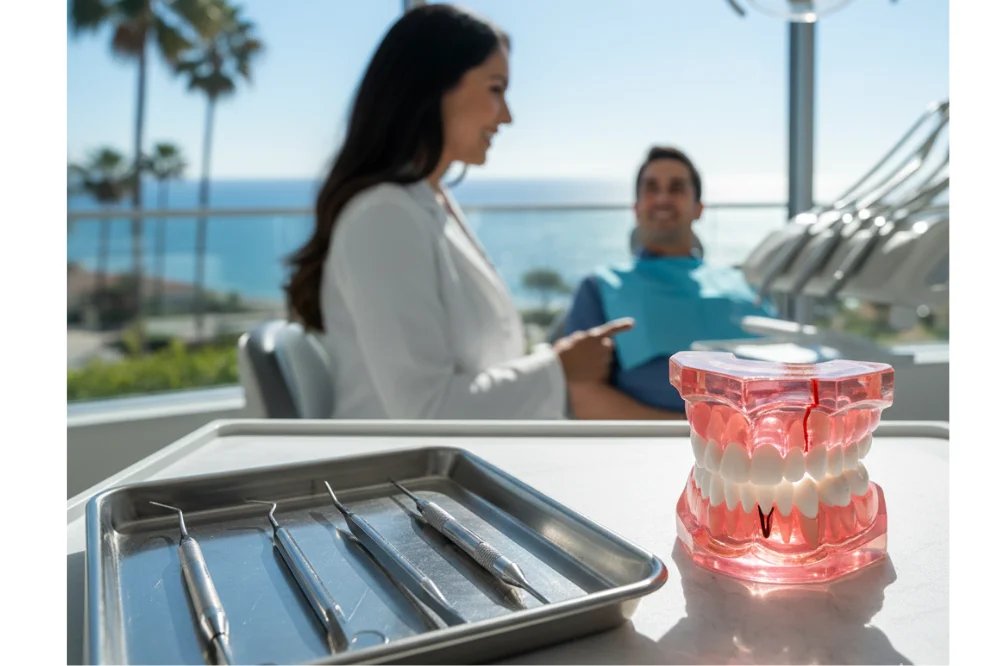
Wondering why some tooth extractions are quick while others are more complex? This guide explains the difference between simple and surgical extractions, when each is needed, and what to expect before, during, and after the procedure. You’ll also learn how to recover faster and save money on care. Whether you’re facing a visible tooth or one hidden under the gums, Laguna Heights Dental makes sure you feel prepared and confident from the start. between simple and surgical tooth extractions, when each is used, and how to heal quickly. Whether it’s a visible tooth or one buried under the gums, Laguna Heights Dental will walk you through the process with comfort and clarity.
Dr. Nazita Gaff, DMD, is a graduate of Tufts University School of Dental Medicine and a fourth-generation dentist with over 25 years of hands-on experience. She specializes in laser and biological dentistry, combining advanced imaging and holistic care to support long-term oral and overall health. Patients from Monarch Point to Kite Hill trust her honest guidance and precision-focused treatments, which align with current best practices from the American Dental Association (ADA). Her emphasis on safety, comfort, and biocompatible materials makes her one of the most respected dentists in Laguna Niguel.
When an Extraction Needs a Surgical Touch
Most people think extractions are simple, but that’s not always true. A surgical extraction is needed when the tooth is stuck under the gum, broken at the root, or curved in a way that makes it harder to remove. We see this a lot with patients from Laguna Heights and Ocean Ranch, especially when wisdom teeth or baby teeth are involved. If your x-ray shows a tooth isn’t budging easily, surgery may be the smartest and safest option.
At Laguna Heights Dental, we make sure you know why a surgical approach is needed-and how we’ll keep you comfortable the entire time. Our patients often feel more at ease once they understand that surgical doesn’t mean complicated-it just means we take a more precise approach. Dr. Gaff also focuses on reducing inflammation and post-surgery discomfort by using biocompatible methods that work with your body’s natural healing.
What to Expect From Simple vs. Surgical Procedures
Dr. Gaff will go over every step before your extraction. A simple procedure involves numbing, gentle pressure, and pulling the tooth out in one piece. A surgical one might require a small incision, sectioning the tooth, or removing bone. You’ll be fully numb either way.
For patients who feel anxious, we offer oral sedation and IV options to help you relax. We also take your full health history into account when planning, especially if you’ve had complications with past dental procedures.
People from Palmilla and Marina Hills often say the actual procedure was easier than they expected. Whether it’s a quick pull or a surgical step, we guide you with care and clear aftercare instructions. We make sure you feel heard, not rushed.
Comparing Extraction Types
When a tooth needs to be removed, the method your dentist chooses depends on the tooth’s position, health, and surrounding bone. Some extractions are quick and simple, while others require minor surgery to protect the surrounding tissue. Understanding these differences helps you prepare for recovery and reduces anxiety before your appointment.
| Type of Extraction | When It’s Used | Recovery Time |
| Simple Extraction | Tooth is visible and easy to remove | 1–3 days |
| Surgical Extraction | Tooth is impacted or below the gumline | 5–7 days |
| Wisdom Tooth Removal | Third molars that are stuck or painful | 7–10 days |
Each extraction type is designed to meet specific needs, from removing a loose baby tooth to addressing a deeply impacted wisdom tooth. Before treatment, we use digital X-rays and 3D imaging to determine the best approach for your comfort and safety. Our goal is to ensure you know exactly what to expect and that every step is done with care and precision.
Tips for Healing After Any Extraction
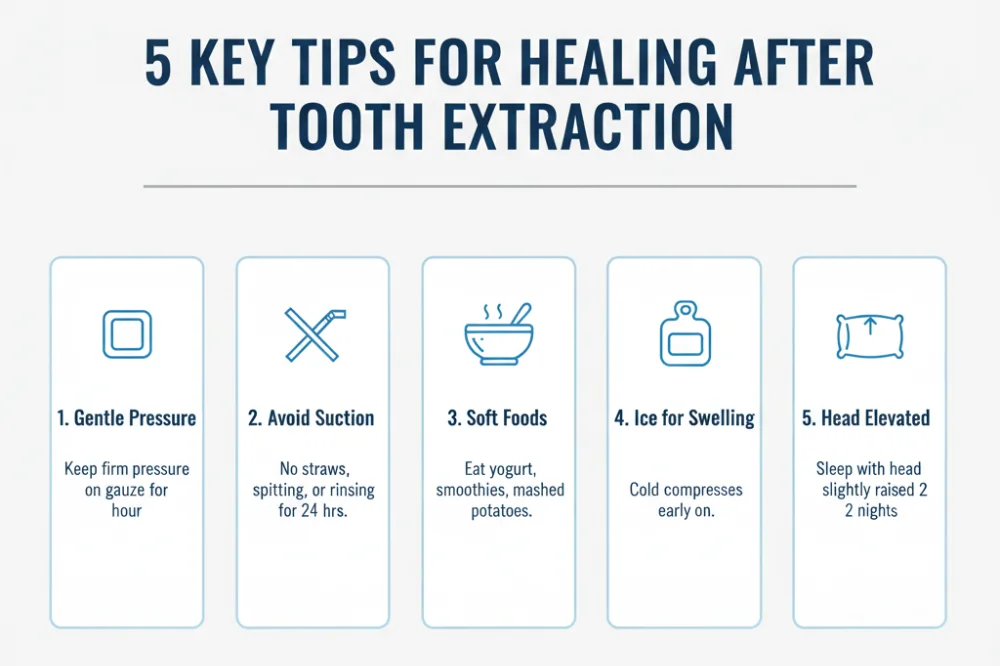
Healing after a tooth extraction feels much easier when you have a simple plan to follow. Most patients recover quickly as long as they protect the blood clot and give their body time to rest. Whether your extraction was simple or surgical, the goal is the same, keep the area clean, avoid unnecessary pressure, and let the healing process unfold naturally.
- Keep firm pressure on gauze for the first hour
- Avoid straws, spitting, or rinsing for 24 hours
- Stick to soft foods like yogurt, smoothies, and mashed potatoes
- Use cold compresses to reduce swelling early on
- Sleep with your head slightly elevated the first two nights
These habits support the healing process and lower your chances of problems like dry socket. They also help reduce swelling and soreness during the first few days. If discomfort suddenly worsens after day three or something doesn’t feel right, call the office so we can check in and guide you.
Healing well doesn’t require special products. Staying hydrated, resting, and avoiding tobacco make a difference. Skipping exercise for a couple of days also helps protect the extraction site. Most people return to their normal routine fairly quickly, especially when they follow the aftercare plan. Our team provides written instructions and checks in after your appointment to make sure everything is going smoothly.
Making Tooth Removal Affordable and Comfortable
We believe everyone deserves quality dental care without the stress of hidden fees or upsells. At Laguna Heights Dental, we provide clear, honest pricing and explain every option before treatment begins. Here’s how we help patients from Beacon Hill to Niguel West save money while still receiving expert care:
- We offer upfront pricing before your procedure
- Anesthesia options are matched to your comfort level, not upsold
- We provide aftercare supplies so you don’t need extras at home
- We help plan affordable replacements like implants or bridges
- We coordinate with most PPO plans and offer financing
This patient-focused approach helps you make smart, informed choices about your care. We take time to answer your questions and build a treatment plan that fits your life. Most of all, you’ll feel confident knowing you got great care without paying for things you didn’t need.
If you’re worried about cost, let us know. We’ll help you compare short-term and long-term options to find the best value for your situation. Our goal is to keep your smile healthy without causing financial stress.
What Happens After the Tooth Comes Out?
Once healing starts, we’ll talk about what’s next. Leaving a gap for too long can cause your teeth to shift, affect your bite, or shrink the jawbone. Replacing the tooth helps your mouth stay healthy and strong.
You don’t need to decide right away. Some patients choose temporary options while planning for a permanent fix. Others go straight to an implant or bridge. Dr. Gaff will help you weigh the pros and cons, so your next step fits your goals and your budget.
We also offer socket preservation during surgical extractions if you know you’ll want a future implant. This helps preserve bone and simplifies the next stage. Planning ahead, even by a few months, can make a big difference in the final result.
Patients from Vista Mar to Crest de Ville often tell us they didn’t realize how many replacement options existed until we walked them through each one. That’s why we take time to educate, not just treat.
Taking the Next Step
Tooth extractions, whether simple or surgical, can feel overwhelming at first. But with the right guidance, they don’t have to be. At Laguna Heights Dental, Dr. Nazita Gaff uses modern tools and a whole-body health approach to make your experience as stress-free and clear as possible. Patients from Ocean Ranch to Crest de Ville appreciate her personalized care, expert credentials, and commitment to doing what’s best for your long-term oral health. No pressure, no surprises, just trustworthy care you can count on.
Whether you’re in Ocean Ranch, Marina Hills, or Monarch Point, we’ll treat you like family and make sure every question gets answered. We want you to feel better, physically, emotionally, and financially, after every visit.
Laguna Heights Dental
30231 Golden Lantern, Ste D
Laguna Niguel, CA 92677
(949) 363-1200
https://lagunaheightsdental.com/
https://www.google.com/maps?cid=4206997137915000203
Frequently Asked Questions
Are surgical extractions safe?
Patients hear “surgery” and worry about risk, even though surgical extractions are a routine part of modern dentistry.
What they should ask instead: How safe are surgical tooth extractions when done by a trained dental professional?
- Immediate Insight: Yes. When performed by a licensed dentist or oral surgeon using local anesthesia and modern instruments, surgical extractions are considered safe and routine. The main goals are to remove a problematic tooth and protect surrounding structures.
- Supporting Context: Professional teams follow strict screening, anesthesia, and infection‑control protocols; this reduces risks like uncontrolled bleeding, infection, or nerve injury to a very low level.
- Deeper Implication: Choosing a qualified provider, sharing your full medical history, and following written aftercare instructions are what turn a “scary surgery” into a predictable, low‑risk procedure with good long‑term oral health benefits.
How do I know if I need surgery?
Patients don’t always know why one tooth can be “pulled” simply while another needs a surgical approach.
What they should ask instead: What tooth and bone conditions make a surgical extraction the better option?
- Immediate Insight: Teeth that are impacted (stuck in the bone or gum), broken off at or below the gumline, severely decayed, or positioned at odd angles often require a surgical extraction rather than a simple one.
- Supporting Context: Imaging (like X‑rays) shows your dentist how the tooth sits in the bone and near nerves or sinuses; wisdom teeth are common candidates for surgery because they are frequently impacted or partially erupted.
- Deeper Implication: A proper exam and X‑ray, sometimes 3D imaging, ensure the right approach is chosen the first time, lowering complication risk and making recovery smoother.
Does surgery cost more than a simple extraction?
People want to understand why fees differ and whether the added cost is justified.
What they should ask instead: Why is a surgical extraction priced higher, and what am I paying for?
- Immediate Insight: Yes. Surgical extractions usually cost more than simple ones because they involve more time, specialized instruments, and often advanced imaging or sedation. National averages reflect higher fees for surgical or impacted extractions than for routine ones.
- Supporting Context: Cost is influenced by tooth position (especially wisdom teeth), the need for incision and bone removal, sedation type, and whether an oral surgeon is involved. Insurance often reimburses differently for simple vs. surgical codes.
- Deeper Implication: An upfront written estimate from your dental team, based on your exact tooth and coverage, helps you understand your financial responsibility before treatment and lets you compare options (timing, sedation, financing) with confidence.
When can I eat normally again?
Food is one of the biggest practical concerns; eating too soon or the wrong foods can cause pain or dry socket.
What they should ask instead: What does a safe return‑to‑eating timeline look like after a surgical extraction?
- Immediate Insight: Start with cool or room‑temperature soft foods (yogurt, applesauce, mashed potatoes, scrambled eggs, smoothies without straws) for at least the first 24–48 hours, then gradually reintroduce more solid foods over the next few days as comfort allows.
- Supporting Context: MouthHealthy (ADA) and medical resources recommend avoiding very hot, crunchy, sticky, or spicy foods, and no straws or vigorous sucking, for several days, because these can dislodge the clot or irritate the site.
- Deeper Implication: Listening to your body and following your surgeon’s specific timeline (which may be longer for complex or multiple extractions) keeps healing on track and helps you avoid complications like dry socket or infection.